Do I Need a Measured Building Survey for Planning Permission?
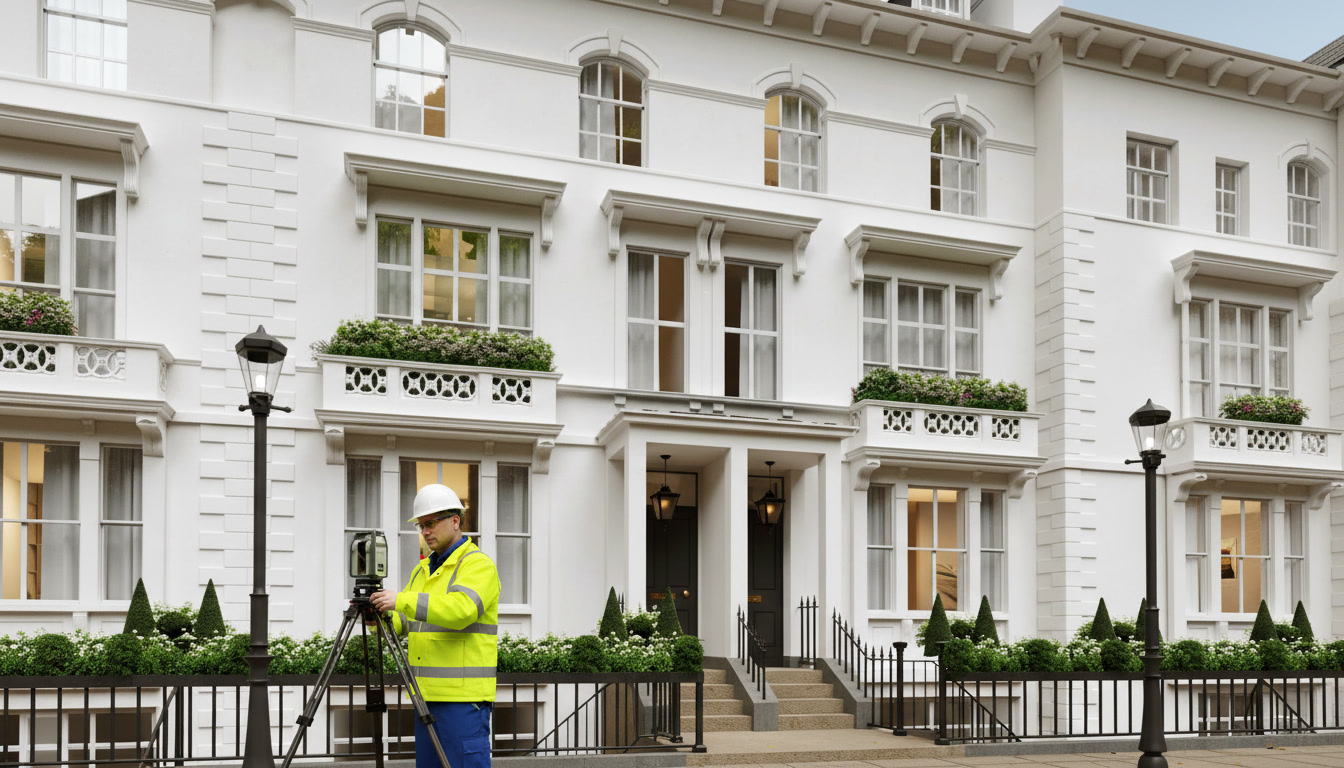
Measured building surveys provide architects with accurate drawings essential for planning applications.
For most projects involving an existing building, the short answer is yes. While planning authorities don't always spell it out explicitly, architects need accurate existing drawings before they can produce anything worth submitting. A measured building survey gives you that foundation.
What Planning Applications Actually Need
When you submit a planning application for works to an existing building — whether that's an extension, conversion, change of use, or refurbishment — the planning authority will expect to see existing and proposed drawings. The existing drawings show the building as it currently stands: floor plans, elevations, sections.
These drawings have to be accurate. A planning officer reviewing your application will be comparing your proposed changes against the existing building. If those baseline drawings are wrong, the whole application is built on shaky ground.
What a Measured Building Survey Delivers
A measured building survey captures the precise dimensions of an existing building using laser scanning technology. The output is a full set of CAD drawings — floor plans, elevations, cross-sections — accurate to within 5mm.
These drawings are then handed directly to your architect, who uses them as the base for the proposed scheme. They're not starting from scratch or guessing dimensions. They're working from accurate data.
Typical deliverables include:
- Floor plans at every level
- Elevations of all principal façades
- Cross-sections showing floor-to-ceiling heights and structural elements
- Roof plans where required
- All supplied in AutoCAD (.dwg), PDF, or your architect's preferred format
When Is It Legally Required?
Strictly speaking, planning authorities don't always mandate a professional measured survey by name. But they do require accurate existing drawings. If your architect is scaling off old estate agents' photos or guessing dimensions, that's a risk to your application — and potentially a costly one if it leads to revisions.
For listed buildings, conservation area properties, or any project involving structural changes, the standard expected is higher. A laser-scanned survey isn't just best practice — it's the professional standard.
How Long Does It Take?
A typical residential survey takes one day on site. CAD drawings are usually delivered within 3–5 working days. For most planning applications, the survey can be completed well in advance of the design work, so there's no reason to let it sit on the critical path.
What Does It Cost?
Every project is priced individually based on the size and complexity of the property. We offer fast, tailored quotes — fill in our quote form and we'll come back to you within 24 hours.
If you're an architect or planning consultant who needs a reliable survey partner across the North West, get in touch. We work closely with practices of all sizes and understand the programme pressures involved in getting a planning application submitted.
Ready to book your survey?
Get an instant quote for your project across Liverpool and the North West.
Get a Quote